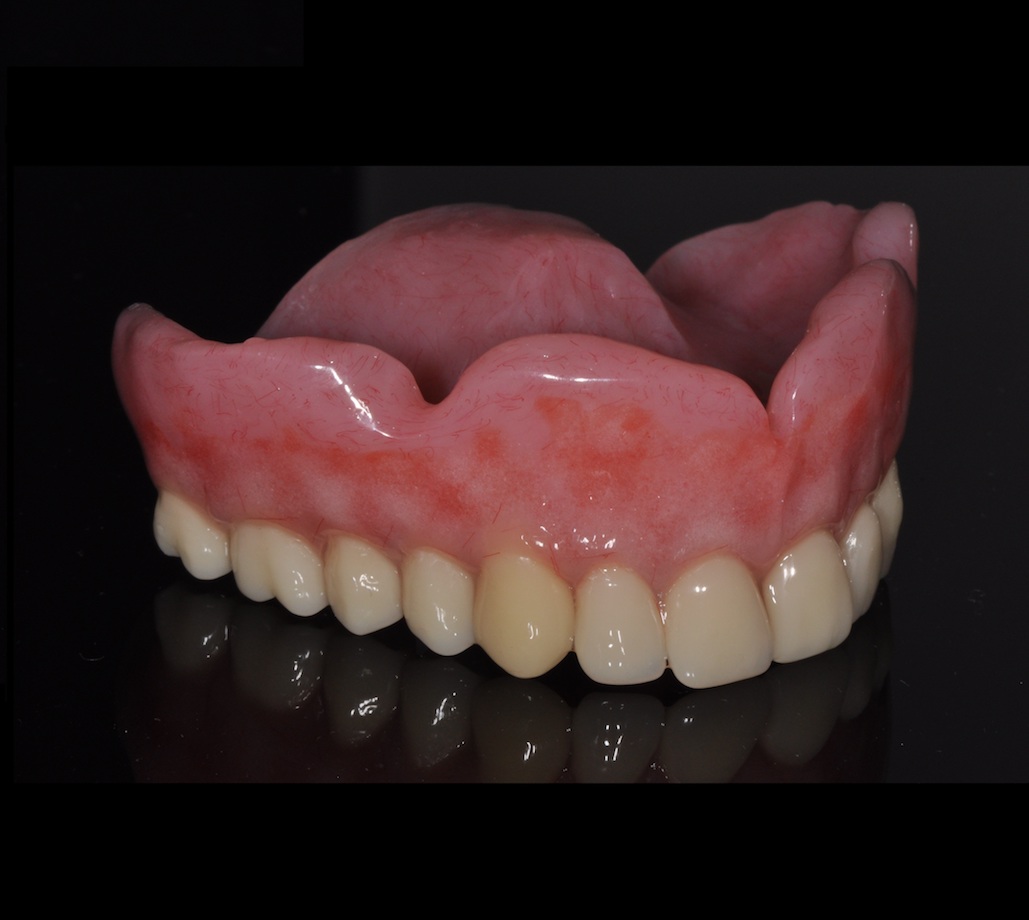
Dentures are removable prosthetic devices that replace missing teeth. There are three main types: full, partial and implant-retained.
Full dentures replace all of the natural teeth in an upper or lower jaw, or both. They rest on the gums and jawbone, restoring support to the lips and cheeks. Full dentures work well for many patients, though like any removable option they have some limitations — worth discussing with your clinician before deciding.
Partial dentures replace one or more missing teeth while your remaining natural teeth stay in place. They’re usually held with clasps or precision attachments, and can combine acrylic with a cobalt-chrome framework for extra strength and a slimmer fit. Where possible, they’re designed to use your remaining teeth for support and reduce movement.
Implant-retained dentures (also called implant overdentures) use one or more dental implants to help clip or anchor a full or partial denture in place. This added stability can address some of the common frustrations with conventional dentures — particularly lower dentures, which tend to be the least stable. adelaideCAD sees a high proportion of complex and implant-retained denture referrals, including cases where an earlier denture hasn’t worked well.
What to expect. Dentures are customised to your mouth for the best balance of fit, function and appearance. It’s normal to need some adjustment visits after fitting, and there’s usually a settling-in period, particularly with a first denture. Where teeth need to be removed and a denture planned, an immediate denture — fitted the same day as the extractions — is sometimes recommended; these tend to need more frequent adjustment in the following weeks.
Ongoing problems with an existing denture — looseness, discomfort, or one that’s simply never fitted well? Ask your dentist about a referral to adelaideCAD, or call (08) 8212 5294 to discuss.